
Structural Support for Overhead Crane Systems
Runway structures provide the critical support system that allows overhead bridge cranes to operate safely and efficiently within a facility. These structural frameworks carry the loads generated by crane movement, lifting operations, and trolley travel, transferring them safely to the building structure or floor foundations. Prolift Crane & Hoist Inc. designs, engineers, and installs both freestanding and tied-back runway systems for a wide range of overhead crane applications. Our team can also provide the structural and wheel-load data required for customers to work with a qualified civil engineer when foundation design is required.

Types of Runway Structures
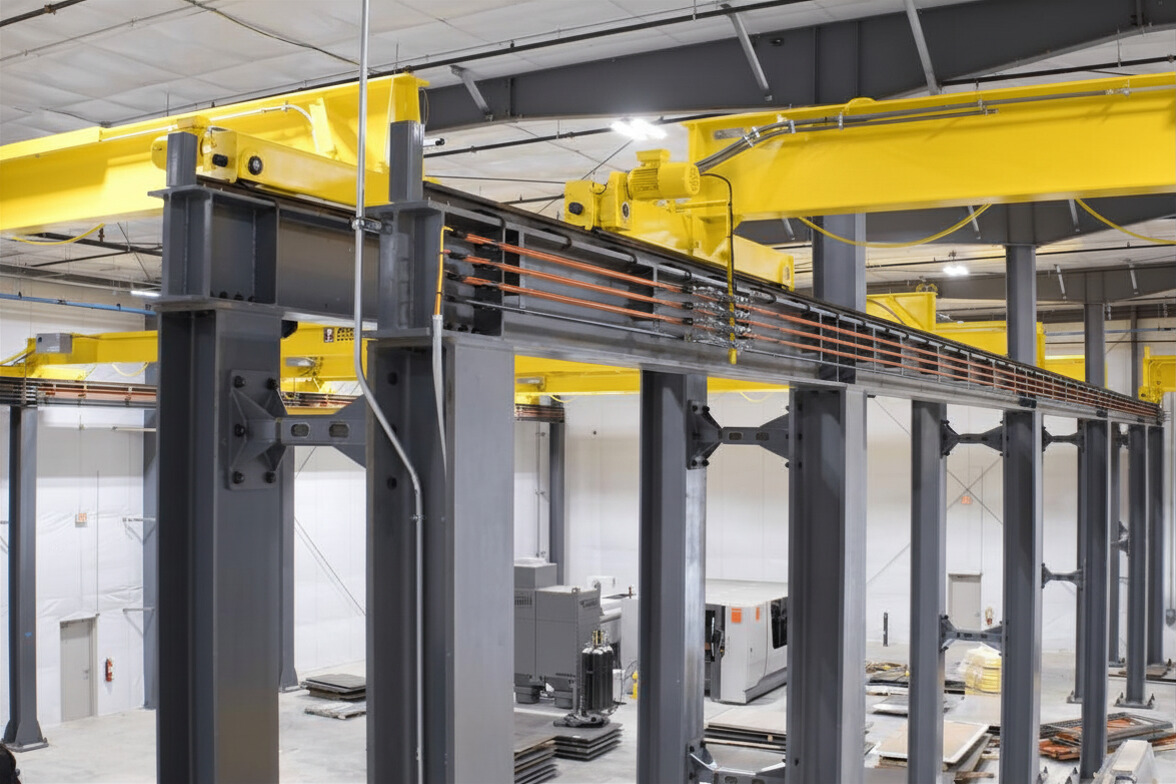
Freestanding Top-Running Runways
Freestanding top-running runways are supported entirely by independent steel columns rather than the building structure. These systems carry all vertical and horizontal crane loads and are often used when existing buildings cannot support crane forces. Is your building structure limiting your options? Prolift can help you find the right solution.
Key characteristics
- Independent column-supported structure
- Transfers loads directly to floor foundations
- Suitable for buildings not designed for crane loads
- Provides flexibility for new layouts or future expansion
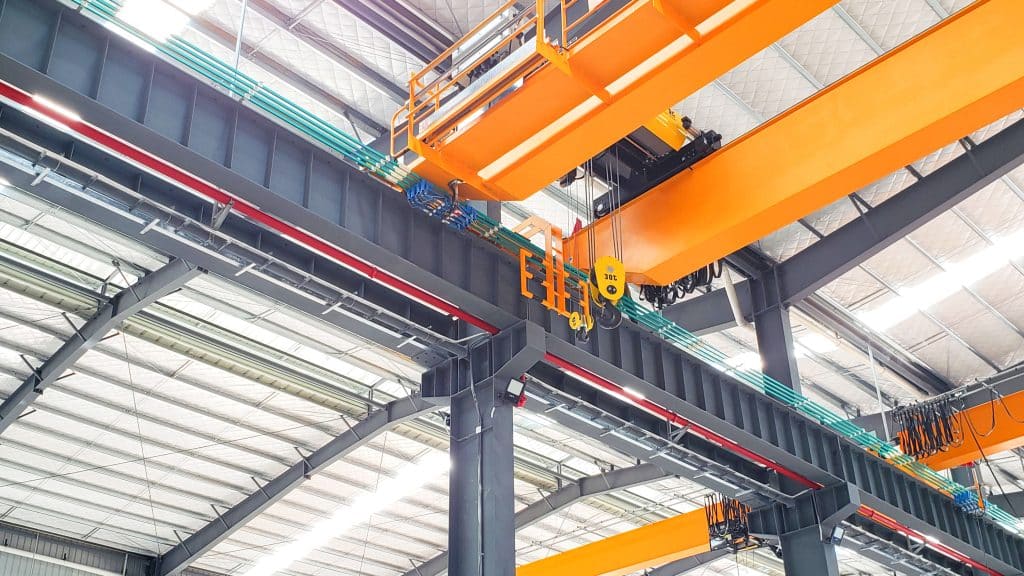
Tied-Back Top-Running Runways
Tied-back runway systems use columns that are braced or connected to the building structure through wall ties or roof bracing. This configuration reduces the amount of structural steel required while still providing strong support for overhead cranes.
Key characteristics
- Columns connected to building structure for added stability
- Requires less steel than fully freestanding systems
- Suitable when buildings can absorb horizontal loads
- Common in existing industrial facilities
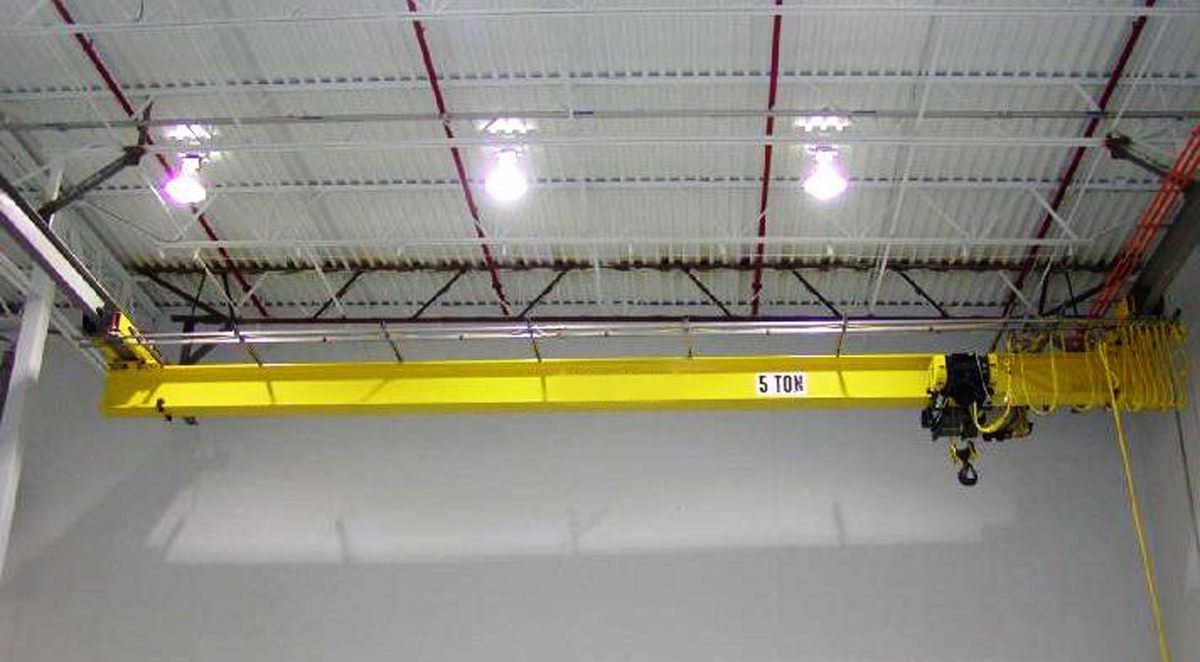
Under-Running Runways (Freestanding, Tied-Back, or Ceiling-Mounted)
Under-running runways support cranes that operate beneath the runway beam rather than on top of it. These systems can be freestanding, tied back, or suspended from the building structure, depending on the facility design.
Key characteristics
- Cranes suspend from the bottom flange of the runway beam
- Helps maximize available hook height
- Suitable for tighter spaces or workstation-style systems
- Allows smooth and precise crane movement